
Overview
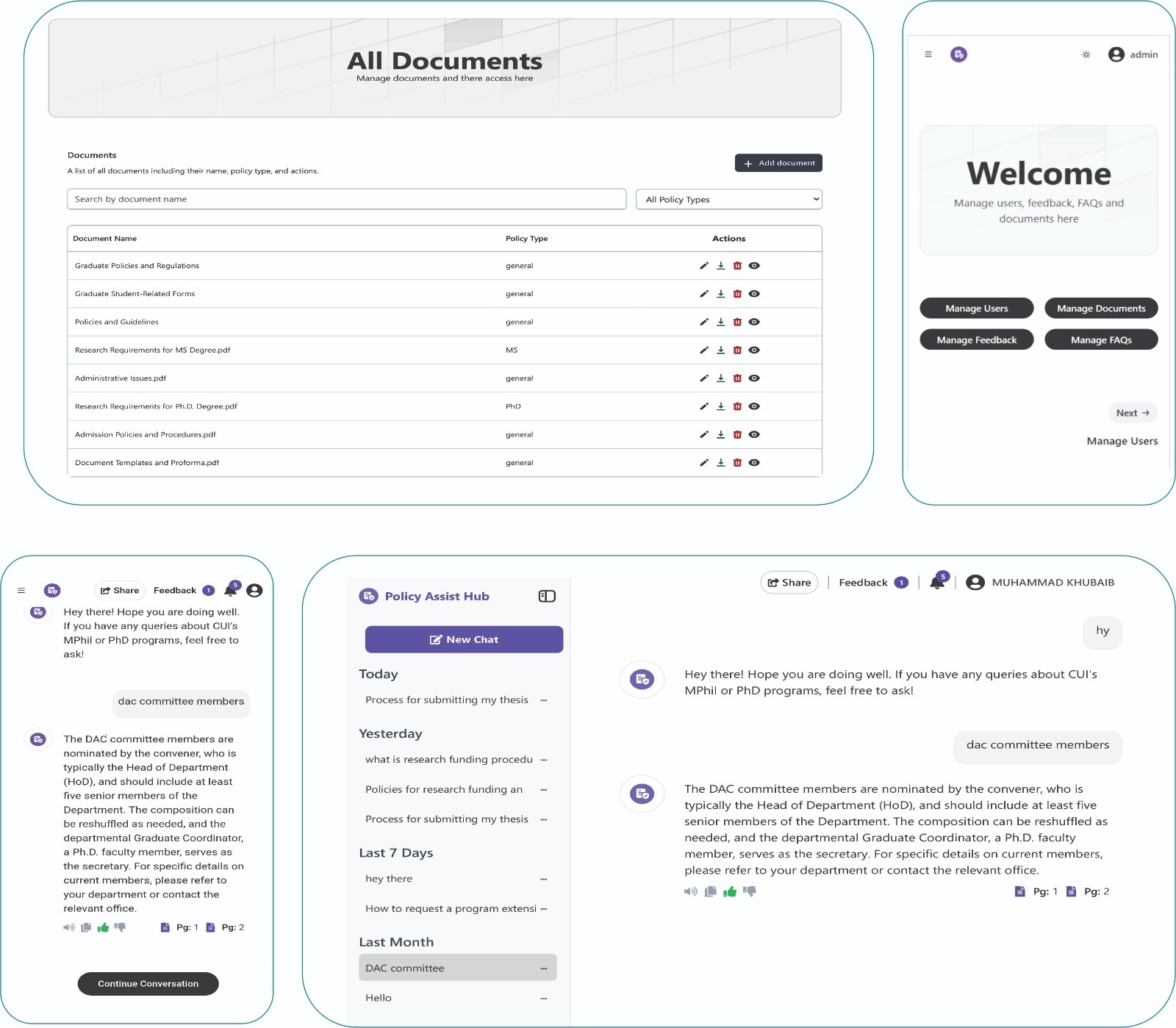
PAH is an AI-powered platform that helps graduate students interact with institutional data. Using Retrieval-Augmented Generation (RAG), the system turns static university policy documents into a conversational interface that returns accurate, context-aware answers in real time.
My Role: Full-Stack AI Engineer
As the lead engineer, I owned the end-to-end development of the AI architecture and web infrastructure: building the RAG pipeline, designing the query classification system, and developing both the student-facing chat interface and the administrative control panel.
Key Features
- AI-based FAQ system — Instant answers to common student inquiries.
- RAG integration — Retrieves information from uploaded policy documents to ground responses in source material.
- Smart document management — An admin portal for real-time uploading and indexing of institutional PDFs and handbooks.
- Query classification — Categorizes user intent to route queries to the correct knowledge base or department.
- Admin & user portals — Separate interfaces for students to chat and administrators to manage data and monitor performance.
Tech Stack
- AI/LLM: OpenAI API (GPT-4), LangChain / LlamaIndex
- Frontend: React.js, Tailwind CSS
- Backend: Node.js, Express.js / Python (FastAPI)
- Database: MongoDB for user data and Pinecone as the vector store for RAG
Why I Built This
Navigating university bureaucracy is difficult for graduate students. This project replaces dense, 100-page handbooks with a smart assistant that adapts to any institution. The RAG pipeline lets administrators update policies on the fly without retraining the underlying model.